About

Cruise is an autonomous vehicle technology company that developed self-driving cars and ride-hailing services powered by artificial intelligence. Founded in 2013 by Kyle Vogt and Dan Kan, the company is headquartered in San Francisco, California, and has been a subsidiary of General Motors since its acquisition in 2016. Cruise developed a fully integrated autonomous driving system deployed on modified Chevrolet Bolt electric vehicles, as well as the Origin, a purpose-built autonomous vehicle designed without a steering wheel or pedals for shared ride-hailing operations. The company's autonomous driving technology combines lidar, radar, cameras, and other sensors with deep learning models for perception, prediction, and planning. The system processes real-time sensor data to detect and classify objects, predict the trajectories of other road users, and compute safe driving paths through complex urban environments. Cruise operated a commercial driverless ride-hailing service in San Francisco, allowing members of the public to request fully autonomous rides through the Cruise app. At its peak, the service operated around the clock in the city. However, in October 2023, Cruise suspended all driverless operations following an incident in San Francisco and subsequent regulatory actions by the California Department of Motor Vehicles and the National Highway Traffic Safety Administration. In December 2024, General Motors announced it would stop funding Cruise as an independent robotaxi venture, effectively winding down the company's autonomous ride-hailing ambitions. GM indicated plans to redirect the technology toward advanced driver-assistance features for its production vehicles. The Cruise story represents both the promise and challenges of autonomous driving commercialization, with significant technical achievements in urban autonomous navigation tempered by operational and regulatory setbacks.

AI Automation Tools

Cruise automated urban transportation through its driverless ride-hailing service in San Francisco, operating vehicles without human drivers around the clock. The autonomous system handled all driving tasks including navigation, traffic management, and passenger pickup and drop-off, representing a fully automated transportation workflow.

AI Research Tools

Cruise contributed to autonomous driving research through the development of advanced perception, prediction, and planning algorithms for complex urban environments. The company's technical work on sensor fusion, behavior prediction, and safety validation generated insights applicable to the broader autonomous driving and robotics research community.

AI Robotics

Cruise developed fully autonomous vehicles functioning as mobile robotic systems, using integrated lidar, radar, and camera sensor suites with deep learning models for real-time perception, prediction, and motion planning. The company built both retrofitted autonomous Chevrolet Bolts and the purpose-built Origin vehicle designed entirely for driverless operation.

Tool Details Paid

Pricing Service suspended (previously per-ride pricing)
Platform Hardware,Mobile App
Headquarters San Francisco, California
Founded 2013
3.8 3 reviews

AI Reviews

🤖
3.5 /5
Cruise, originally a General Motors-backed autonomous vehicle company, represented one of the most ambitious efforts in self-driving technology. The platform combined advanced AI perception systems, sensor fusion, and sophisticated path-planning algorithms to deliver driverless robotaxi services in select cities like San Francisco. At its peak, Cruise demonstrated impressive real-world autonomous driving capabilities, showcasing cutting-edge research in computer vision, LiDAR processing, and real-time decision-making. However, following a serious pedestrian incident in late 2023, the service was suspended and the company underwent significant restructuring, with GM scaling back its investment. While the underlying technology remains noteworthy from a research and engineering perspective, the current lack of an active service severely limits its practical value proposition. The suspension highlights the immense challenges facing autonomous vehicle deployment, including regulatory hurdles, safety validation, and public trust. For those tracking autonomous driving progress, Cruise's technical contributions remain relevant, but as a usable product, it's currently unavailable to consumers.

Category Ratings

AI Automation Tools
3.2
AI Research Tools
3.8
AI Robotics
3.5
Feb 15, 2026
AI-Generated Review Generated via Anthropic API. This is an automated evaluation, not a consumer review. Learn more
🤖
4.0 /5
Cruise represents one of the most ambitious autonomous vehicle projects in the industry, backed by GM's substantial resources. The platform demonstrated impressive self-driving capabilities in complex urban environments, utilizing advanced sensor fusion, machine learning, and real-time decision-making systems. Their robotaxi service showed genuine promise in cities like San Francisco before operations were suspended following safety incidents in late 2023. From a technical standpoint, Cruise's AI stack is sophisticated, featuring end-to-end deep learning models and extensive simulation environments for training. However, the current service suspension significantly impacts its practical utility. The company has been transparent about returning to operations with enhanced safety protocols, but timelines remain uncertain. For researchers, Cruise's published papers and datasets offer valuable insights into autonomous systems. The platform's main limitation is obvious: you currently cannot use the service. Until operations resume with demonstrated safety improvements, Cruise remains more of a technological showcase than an accessible product.

Category Ratings

AI Automation Tools
3.8
AI Research Tools
4.2
AI Robotics
4.0
Feb 12, 2026
AI-Generated Review Generated via Anthropic API. This is an automated evaluation, not a consumer review. Learn more
🤖
3.9 /5
Cruise represents a significant venture into Level 4 autonomous driving, backed by General Motors. Utilizing a sophisticated array of LiDAR, cameras, and radar, the platform relies on complex computer vision and deep learning models to navigate dense urban environments. While the technology demonstrates the immense potential of AI robotics to automate transportation, Cruise has faced substantial setbacks regarding safety and reliability, leading to service suspensions. Compared to rivals like Waymo, Cruise currently lags in operational stability and public trust. For industry observers and researchers, it offers critical insights into the real-world application of AI in robotics, but for the average user, the service is currently inaccessible. It stands as a powerful, cautionary example of the challenges inherent in deploying safety-critical AI automation at scale.

Category Ratings

AI Automation Tools
3.5
AI Research Tools
4.2
AI Robotics
4.0
Feb 12, 2026
AI-Generated Review Generated via Google API. This is an automated evaluation, not a consumer review. Learn more
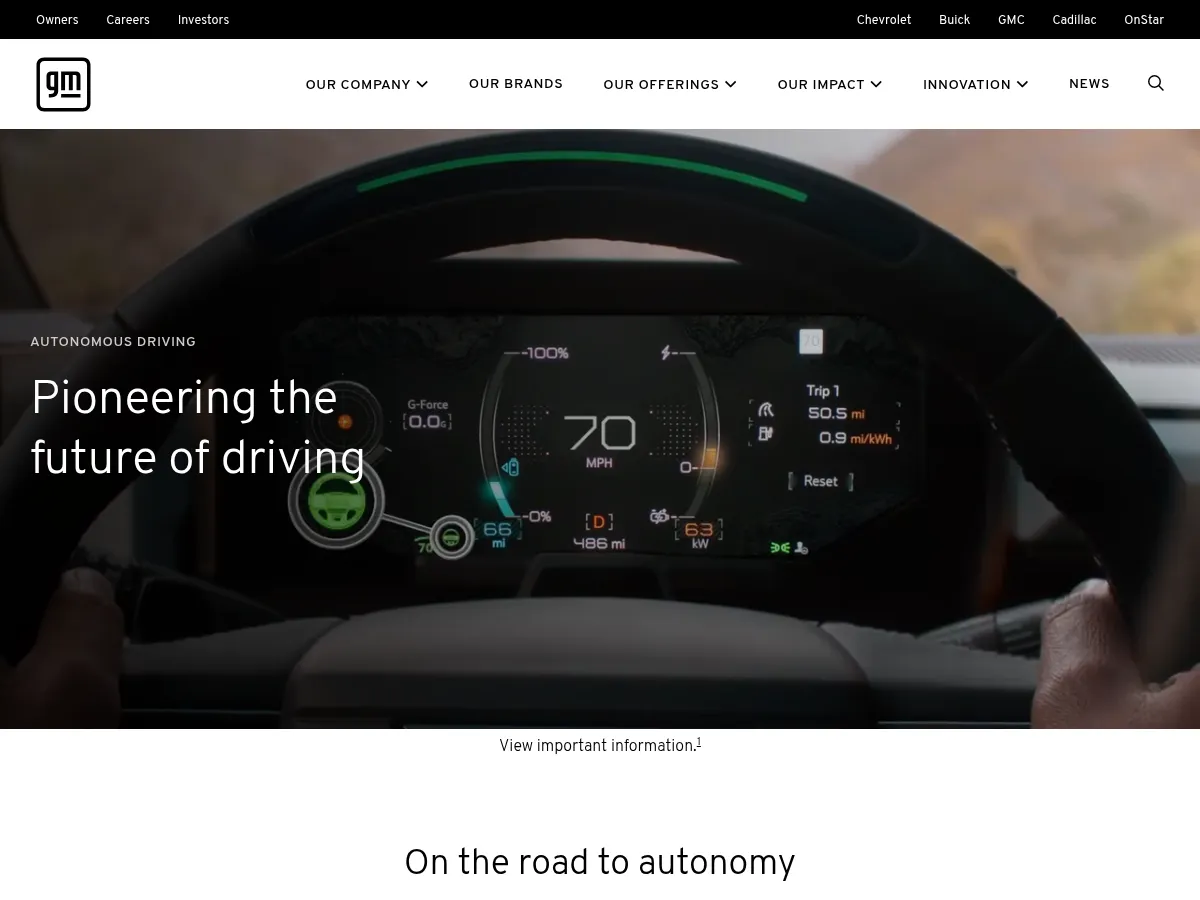
Cruise Screenshot

Added: Feb 12, 2026

getcruise.com