Qdrant
About
Tool Details Freemium
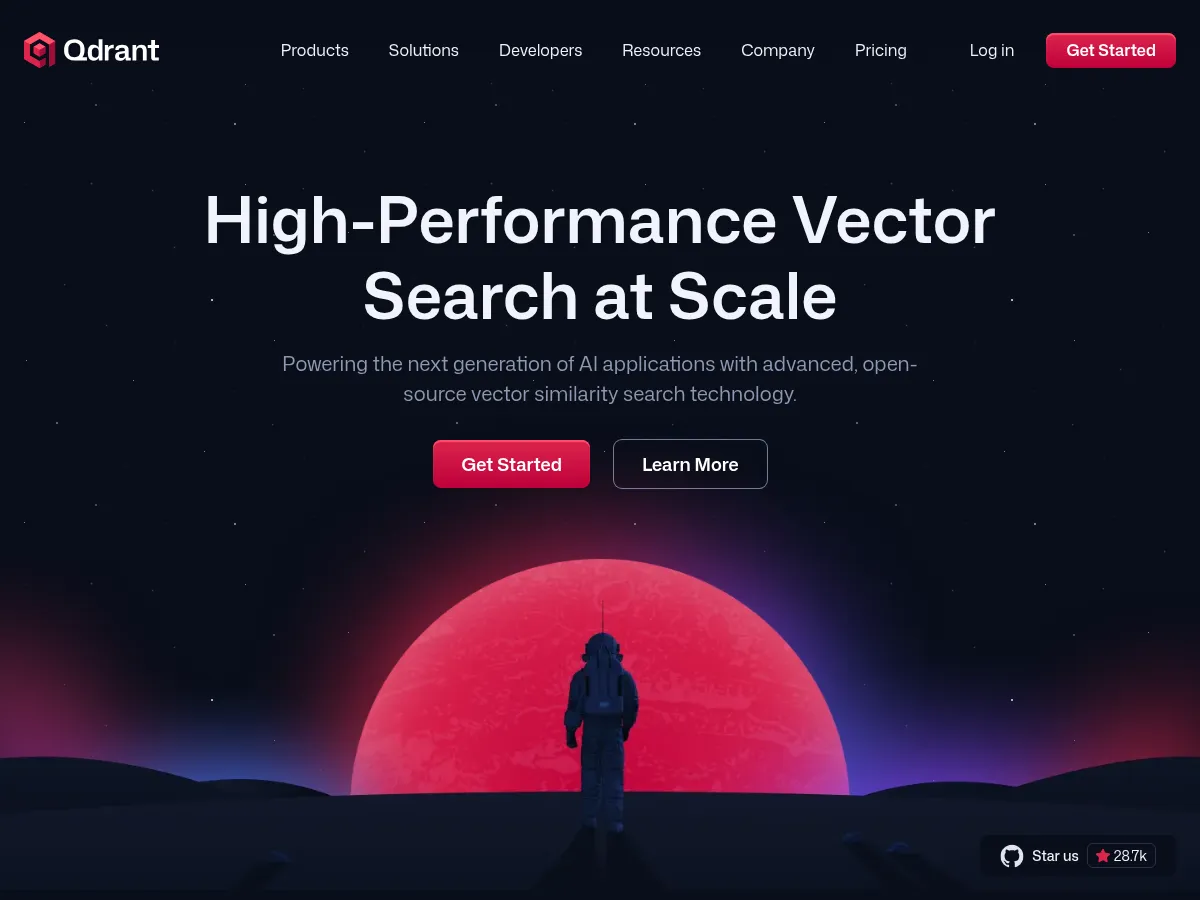
Qdrant is a high-performance, open-source vector database built in Rust that has quickly become one of the top choices for similarity search and AI applications. Its architecture delivers excellent speed and memory efficiency, making it well-suited for production-scale deployments. The filtering capabilities are particularly impressive " Qdrant supports rich payload filtering alongside vector search, enabling complex queries without sacrificing performance.
The API is well-documented with gRPC and REST interfaces, plus client libraries for Python, JavaScript, Rust, Go, and more. The freemium cloud offering starting at $25/mo provides a low barrier to entry, while the open-source option gives teams full control over self-hosted deployments.
Strengths include quantization support for reduced memory usage, flexible deployment options (cloud, hybrid, on-premise), and an active development community. The dashboard UI is clean and functional for managing collections. Limitations include a steeper learning curve compared to simpler alternatives like Pinecone, and the ecosystem of integrations, while growing rapidly, is still catching up to more established players. Overall, Qdrant offers an excellent balance of performance, flexibility, and cost-effectiveness for teams building AI-powered search and retrieval systems.
 Powered by Rexiew