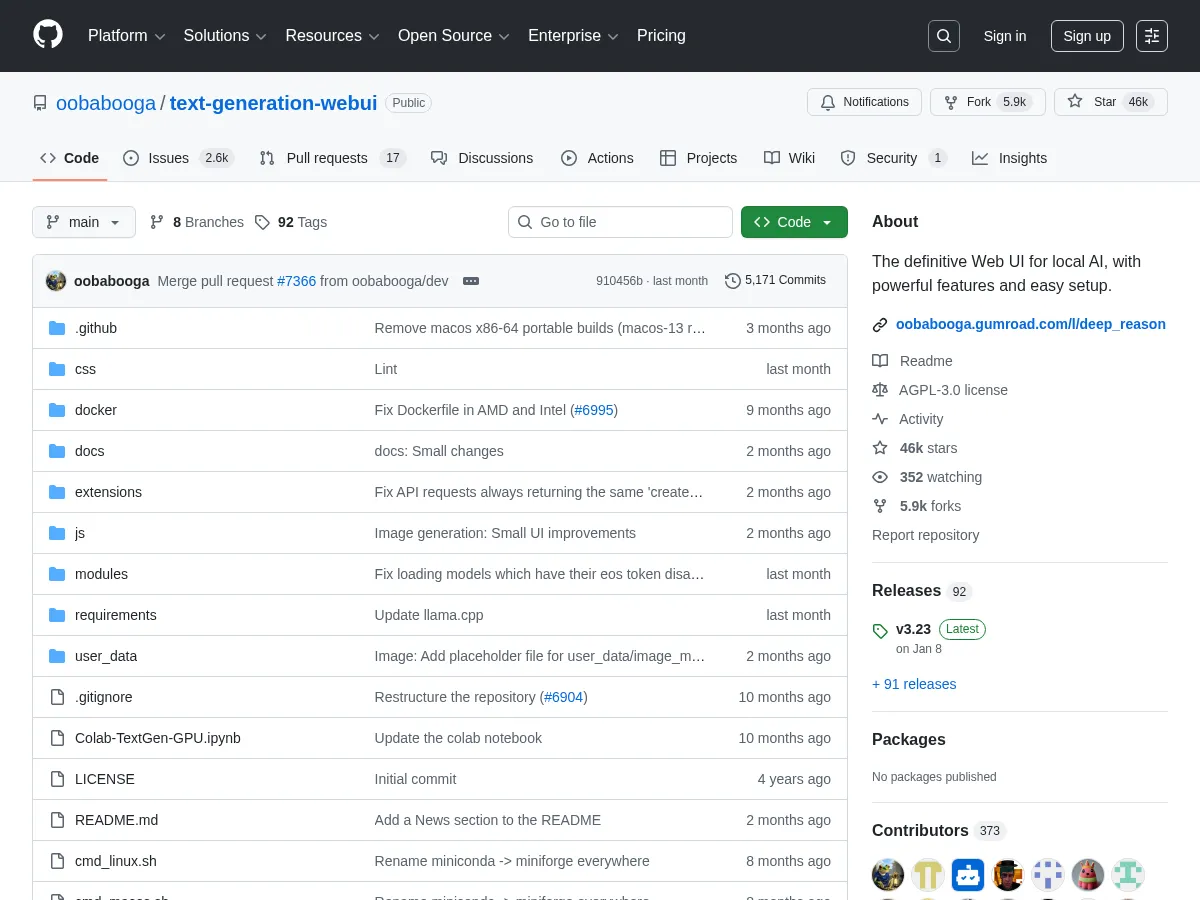
Text Generation Web UI
Chi siamo
Dettagli dello strumento Gratuito
Text Generation Web UI (commonly known as 'oobabooga') is the go-to open-source interface for running local large language models. It supports an impressive range of backends including transformers, GPTQ, GGUF (via llama.cpp), ExLlamaV2, and more, making it one of the most versatile LLM frontends available. The Gradio-based web interface offers multiple interaction modes"chat, notebook, and instruct"along with parameter tuning, LoRA loading, and extension support. Its built-in API mimics the OpenAI format, enabling easy integration with existing tools. Setup can be challenging for newcomers, particularly around model quantization formats and GPU memory management, but the one-click installers for Windows/Linux/macOS have significantly lowered the barrier. The active community and frequent updates ensure compatibility with the latest models. While alternatives like LM Studio offer a more polished UX, oobabooga's extensibility, backend flexibility, and deep customization options make it the power user's choice for local LLM deployment. Completely free and open source"hard to beat.
 Powered by Rexiew