vLLM
소개
도구 세부정보 무료
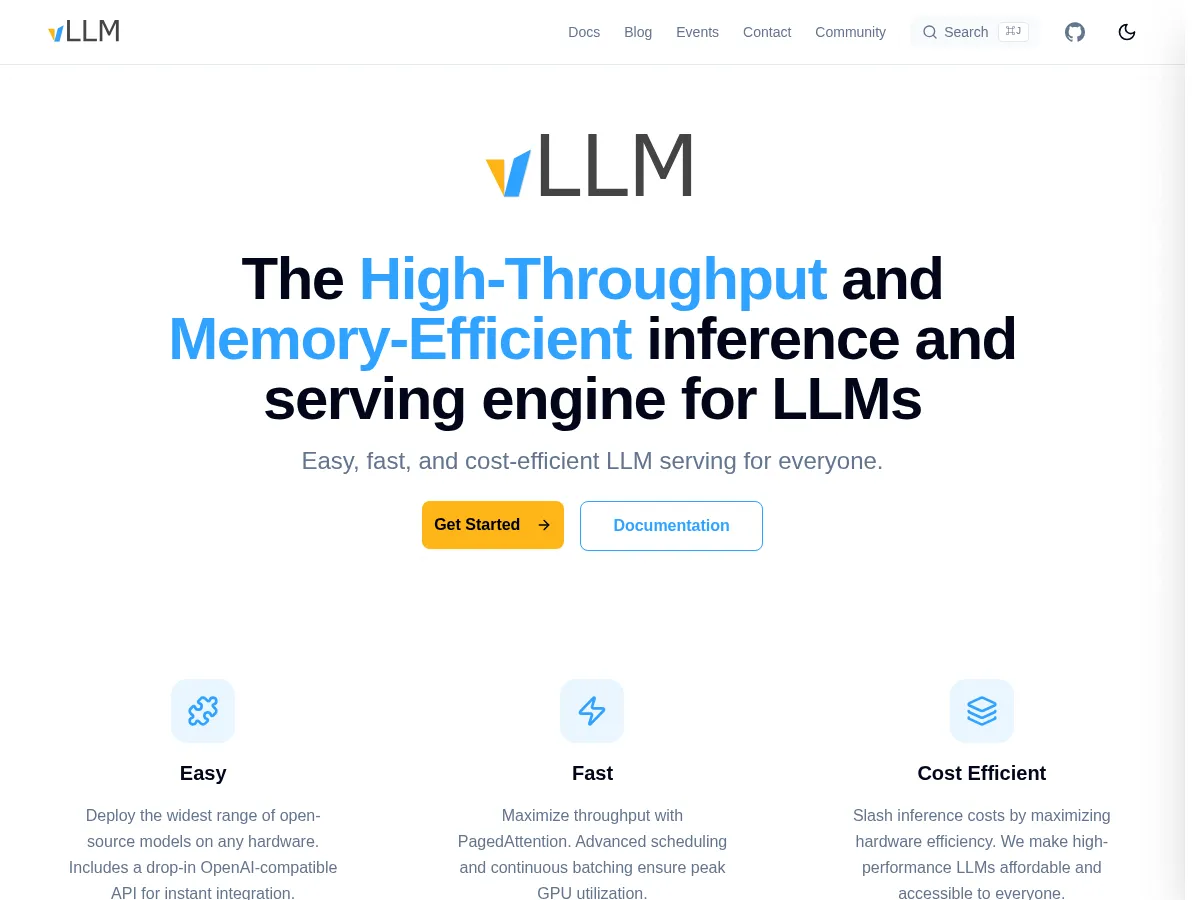
vLLM has quickly become the gold standard for high-throughput LLM inference and serving. Its core innovation"PagedAttention"dramatically improves memory management during inference, enabling significantly higher throughput compared to naive implementations like HuggingFace's default text-generation pipeline. The project supports a wide range of popular open-source models including LLaMA, Mistral, Qwen, and many more, with an OpenAI-compatible API server that makes migration from proprietary APIs remarkably straightforward. Setup is relatively simple for those comfortable with Python environments, and the documentation has matured considerably. Key strengths include continuous batching, tensor parallelism for multi-GPU setups, and speculative decoding support. The active community and rapid development pace mean new model architectures are supported quickly. Limitations include a steeper learning curve for production-grade deployments and occasional compatibility issues with bleeding-edge model formats. GPU memory requirements remain substantial, though that's inherent to LLM serving rather than a vLLM-specific issue. For anyone self-hosting open-source LLMs, vLLM is essentially a must-evaluate solution"it's free, performant, and production-ready.
 Powered by Rexiew