Zillow AI
关于
AI 分析工具
Zillow提供由AI驱动的广泛房地产市场分析,包括房屋价值趋势、市场预测、社区比较和租赁价格估计。房地产专业人士和消费者使用Zillow的数据驱动洞察来了解本地市场情况、追踪房产价值随时间的变化,以及做出明智的购买、销售和投资决策。
AI 数据分析
Zillow 运用复杂的机器学习和神经网络模型来分析每个房产的数百个数据点,包括物理属性、税务记录、可比销售和市场条件。其 Zestimate 算法代表了房地产领域最大规模的 AI 驱动数据分析应用之一,持续处理数百万个数据更新,以完善全国各地的房屋估值。
AI房地产工具
Zillow 是美国领先的 AI 驱动房地产平台,采用 Zestimate 自动估值模型,该模型使用机器学习为超过 1 亿套房屋估算市场价值。该平台为购房者、卖房者和租户提供 AI 驱动的房产搜索、估值评估、租赁定价和市场洞察,这些内容随着新数据的推出而持续更新。
AI 搜索引擎
Zillow 提供的 AI 增强型房产搜索功能可从用户行为、偏好和搜索历史中学习,以呈现最相关的房源列表。其自然语言搜索功能允许用户以对话方式描述理想的房产,而推荐算法会主动建议与每个用户的已证实兴趣和需求相匹配的房源。
房产科技股票
Zillow 的 Zestimate 房屋估值算法和综合房源平台代表了为购房者、卖房者和房地产专业人士提供的领先 PropTech 解决方案。
房地产应用
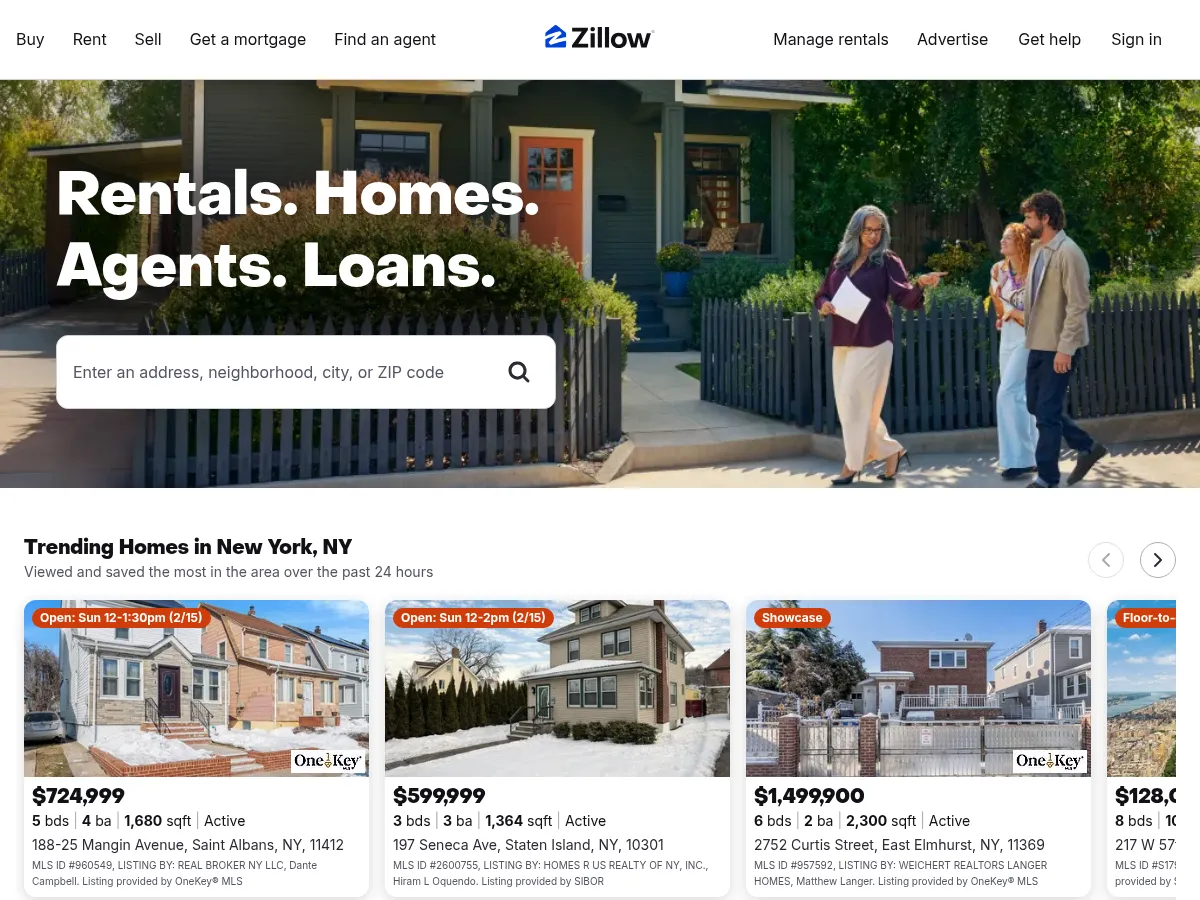
Zillow 是领先的房地产平台,提供 Zestimate 房屋估值、数百万房源、3D 虚拟参观、抵押贷款工具和社区信息,服务于购房者、卖房者和租户。
房地产股票
Zillow 是美国访问量最大的房地产网站,提供房屋估值、房源列表和抵押贷款服务,使其成为住宅房地产领域的主导数字平台。
工具详情 免费
Zillow AI leverages machine learning extensively through its Zestimate algorithm and natural language search capabilities, making it the dominant AI-powered platform in residential real estate. The Zestimate home valuation model processes millions of data points to deliver automated property valuations, and while not always perfectly accurate, it provides a strong baseline for buyers and sellers. The recently introduced natural language search lets users describe their ideal home conversationally, which is a genuine leap forward in property discovery. The platform is free for consumers, which is a massive value proposition, and the available API opens doors for developers building real estate applications. Strengths include unmatched data coverage across U.S. markets, intuitive UX, and continuously improving AI models. Limitations include Zestimate accuracy variance in rural or unique-property markets, and the platform's heavy focus on lead generation for agents can feel intrusive. As a general analytics or data analysis tool it's narrowly scoped to real estate, but within that domain, it's best-in-class and hard to beat at the price point of free.
 Powered by Rexiew