关于

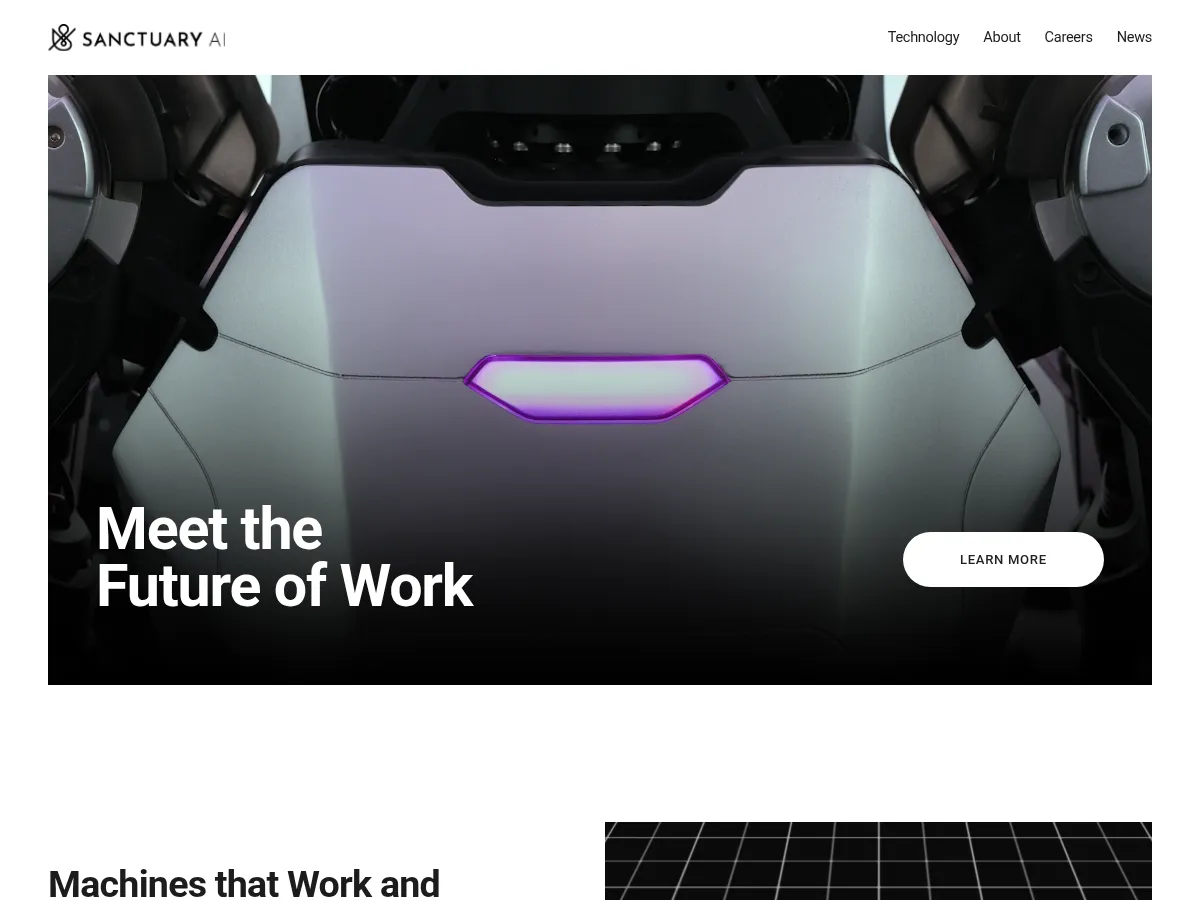
Sanctuary AI is a robotics and artificial intelligence company developing general-purpose humanoid robots with human-like intelligence for commercial and industrial applications. Founded in 2018 by Geordie Rose, Suzanne Gildert, Olivia Norton, and Ajay Agrawal, the company is headquartered in Vancouver, British Columbia, Canada. Sanctuary AI's mission is to create the world's first human-like intelligence in general-purpose robots, an approach the company refers to as building artificial general intelligence in physical form. The company's primary product is Phoenix, a humanoid robot designed to perform a wide variety of tasks in work environments. Phoenix features a human-scale form factor with dexterous hands capable of fine manipulation, bipedal or wheeled locomotion depending on the configuration, and an AI control system called Carbon that serves as the robot's cognitive architecture. Carbon is Sanctuary AI's proprietary AI system that combines large-scale machine learning models with real-time sensory processing to enable the robot to understand tasks, plan actions, and execute physical work. The system allows Phoenix to learn new tasks from demonstrations and verbal instructions, with the goal of enabling rapid deployment across different industries without extensive reprogramming. Sanctuary AI has focused on deploying Phoenix in retail, manufacturing, and logistics environments. The company has conducted pilot programs with major retailers where the robots perform tasks such as picking and packing, inventory scanning, shelf stocking, and customer order preparation. Sanctuary AI has also explored applications in automotive manufacturing and other industrial settings. The company has raised significant venture capital to fund the development and commercialization of its humanoid robot platform. Sanctuary AI operates on an enterprise model, providing its robots through commercial agreements with deployment partners, with pricing structured around robots-as-a-service or direct purchase arrangements.

AI自动化工具

Sanctuary AI 的 Phoenix 机器人可自动化零售、制造和物流环境中的物理任务。在零售环境中,机器人执行拣选、打包、库存扫描和货架补货。在制造业中,它处理组装任务和物料管理,提供灵活的自动化解决方案,可在不同任务之间切换。

AI电子商务工具

Sanctuary AI 已在零售和电子商务履行试点计划中部署了其 Phoenix 机器人,该人形机器人执行拣选、打包和订单准备任务。该机器人处理多样产品和学习新任务的能力使其适用于零售运营和在线订单履行的多样化需求。

AI 研究工具

Sanctuary AI 通过其 Carbon AI 架构追求开发以物理机器人形式体现的人工通用智能。该公司的研究涵盖认知架构、模仿学习、灵巧操控和人机交互,为构建具有类人通用智能的机器这一更广泛的科学理解做出贡献。

AI机器人

Sanctuary AI 开发了 Phoenix,这是一款具备灵巧手部和 Carbon AI 认知架构的通用人形机器人。该机器人设计用于在商业环境中执行各种物理任务,能够从演示和口头指令中学习新任务,而无需为每个应用程序进行显式编程。

工具详情 付费

价格 Enterprise pricing (robots-as-a-service or direct purchase; custom quotes)
平台 Hardware
总部 Vancouver, British Columbia, Canada
成立于 2018
企业计划
4.1
1 reviews
Automation Effectiveness
4.2
Learning Curve
3.6
Customer Support
3.5
Accuracy & Reliability
3.5
Ease of Integration
3.2
Value for Money
3
Claude Opus 4.6
AI Review
4.1/5

Sanctuary AI is a pioneering company building general-purpose humanoid robots powered by their proprietary Carbon AI system, which aims to replicate human-like intelligence and dexterity. Their flagship Phoenix robot is designed for real-world labor tasks across warehousing, manufacturing, and retail environments.

Strengths include their impressive approach to embodied AI " combining advanced manipulation, natural language understanding, and autonomous task execution in a humanoid form factor. The robots-as-a-service model lowers the barrier to enterprise adoption, and their focus on general-purpose capability rather than single-task automation sets them apart from many competitors.

Limitations are notable: enterprise-only pricing puts this well beyond reach for smaller businesses, and real-world deployment is still in early stages compared to more established industrial automation solutions. The e-commerce application potential exists but remains largely theoretical at scale. Transparency around specific performance benchmarks and integration APIs is limited.

As a research-driven robotics company pushing the boundaries of humanoid AI, Sanctuary AI represents one of the most ambitious efforts in the space alongside Figure and Tesla Optimus, though commercial maturity is still developing.

Automation Effectiveness
4.2
Learning Curve
3.6
Accuracy & Reliability
3.5
Customer Support
3.5
Ease of Integration
3.2
Value for Money
3
Feb 15, 2026