Semantic Scholar
حول
تحليل المستندات بالذكاء الاصطناعي
يوفر Semantic Reader من Semantic Scholar ميزات تحليل مستندات مدعومة بالذكاء الاصطناعي تعزز تجربة القراءة للأوراق الأكاديمية. يقدم تعريفات المصطلحات المدرجة وبطاقات سياق الاستشهادات التي توضح صلة الأوراق المرجعية وتحليل الأشكال والملاحة الهيكلية، مما يساعد القراء على فهم المستندات الأكاديمية المعقدة بكفاءة أكبر.
قواعد المعرفة بالذكاء الاصطناعي
يحتفظ Semantic Scholar بواحدة من أكبر قواعد المعرفة الأكاديمية المفتوحة في العالم، حيث يحتوي الرسم البياني الأكاديمي الخاص به على أكثر من 200 مليون ورقة بحثية وعلاقات استشهاد ومعلومات المؤلفين وتصنيفات الموضوعات. هذه قاعدة المعرفة المنظمة متاحة بحرية عبر واجهة برمجية (API)، وتعمل كأساس لأدوات وتطبيقات البحث الأكاديمي.
أدوات البحث العلمي بالذكاء الاصطناعي
يوفر Semantic Scholar أدوات أبحاث ذكاء اصطناعي أساسية تشمل اكتشاف الأوراق الذكي وتحليل سياق الاستشهادات وملفات تعريف المؤلفين والتغذيات البحثية المخصصة. يستخدمه الباحثون لتتبع الاستشهادات والعثور على الأعمال ذات الصلة وتحديد الأوراق المؤثرة في مجالهم والبقاء على اطلاع بالمنشورات الجديدة من خلال التوصيات المدعومة بالذكاء الاصطناعي بناءً على اهتماماتهم البحثية.
محركات البحث بالذكاء الاصطناعي
Semantic Scholar هو محرك بحث أكاديمي رائد مدعوم بالذكاء الاصطناعي يستخدم معالجة اللغات الطبيعية لفهم المعنى وراء استعلامات البحث والعثور على الأوراق ذات الصلة من مجموعة بيانية تضم أكثر من 200 مليون منشور. تتجاوز إمكانيات البحث الدلالي فيه مطابقة الكلمات الرئيسية للعثور على الأبحاث المرتبطة مفاهيمياً عبر جميع التخصصات العلمية.
أدوات التلخيص بالذكاء الاصطناعي
يقدم Semantic Scholar ملخصات TLDR التي تم إنشاؤها بواسطة الذكاء الاصطناعي وتوفر نظرات عامة موجزة في جملة واحدة عن الأوراق الأكاديمية، مما يمكّن الباحثين من تقييم صلة الأوراق بسرعة دون الحاجة لقراءة الملخصات الكاملة. تنطبق ميزة التلخيص هذه على كامل مجموعتها البيانية التي تضم أكثر من 200 مليون ورقة بحثية، مما يسرع بشكل كبير عملية مسح الأدبيات.
تفاصيل الأداة مجاني
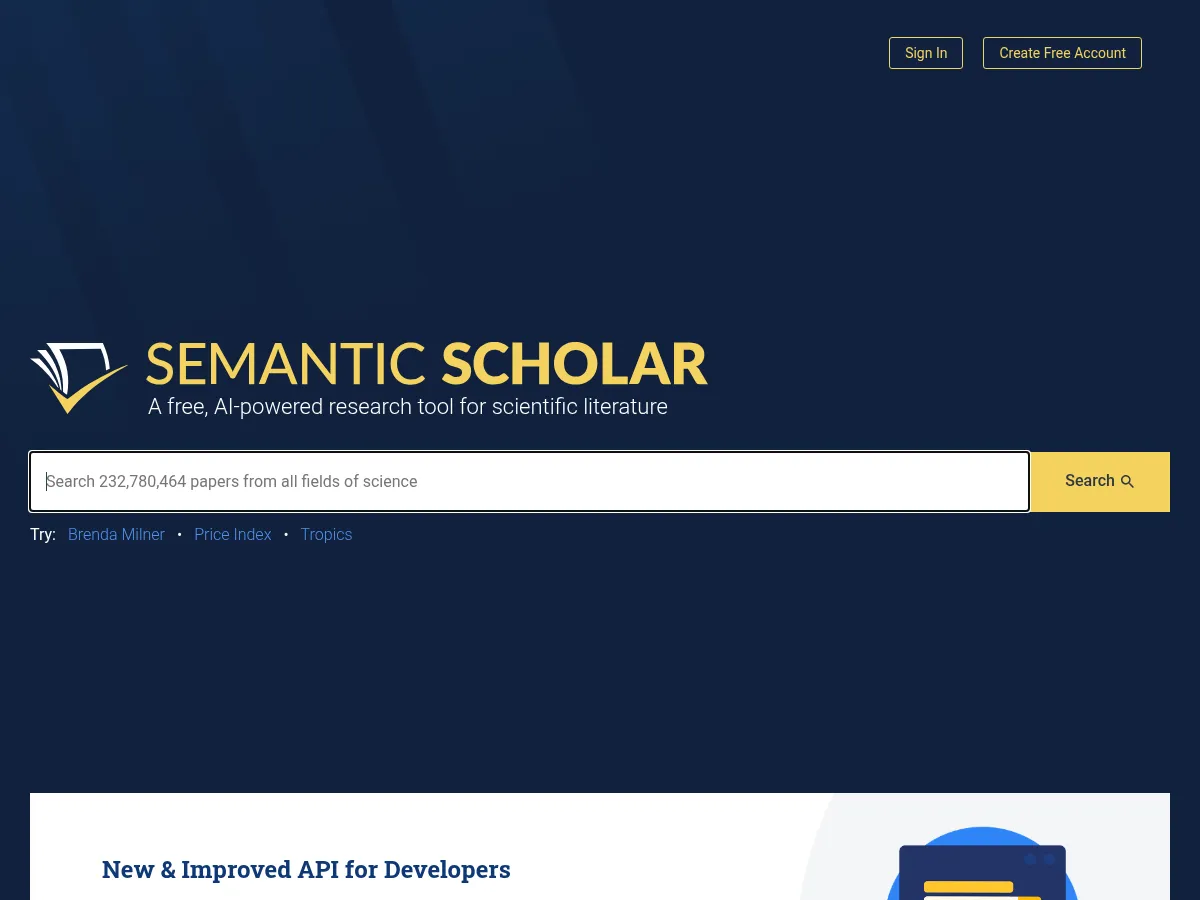
Semantic Scholar, developed by the Allen Institute for AI, is one of the most powerful free academic search engines available. With over 200 million papers indexed, it leverages AI to surface relevant research through semantic understanding rather than simple keyword matching. Its TLDR feature provides concise AI-generated summaries of papers, while citation context and influence scores help researchers quickly assess a paper's impact and relevance.
The platform's open API is a standout feature, enabling developers to build custom research tools and integrate scholarly data into workflows. The knowledge graph connecting papers, authors, and topics is exceptionally well-structured, making literature discovery intuitive and efficient.
Strengths include its completely free access, robust API, citation analysis tools, and the Semantic Reader for enhanced paper comprehension. Limitations include occasional gaps in non-English literature coverage, and the AI summarization, while useful, can oversimplify nuanced findings. The interface is clean but could benefit from more advanced filtering options. For academic researchers and anyone navigating scientific literature, Semantic Scholar is an indispensable tool that genuinely democratizes access to knowledge.
 Powered by Rexiew