Semantic Scholar
关于
AI 文档分析
Semantic Scholar 的 Semantic Reader 提供了 AI 驱动的文档分析功能,增强了学术论文的阅读体验。它提供内联术语定义、引文上下文卡片(显示参考论文的相关性)、图表分析和结构导航,帮助读者更高效地理解复杂的学术文档。
AI 知识库
Semantic Scholar 维护着世界上最大的开放学术知识库之一,其 Semantic Scholar Academic Graph 包含超过 2 亿篇论文、引文关系、作者信息和主题分类。这个结构化知识库可通过 API 免费访问,为学术研究工具和应用程序奠定基础。
AI 研究工具
Semantic Scholar 提供了基本的 AI 研究工具,包括智能论文发现、引文上下文分析、作者档案和个性化研究订阅。研究人员使用它来跟踪引文、发现相关工作、识别其领域中的有影响力的论文,以及通过基于其研究兴趣的 AI 驱动推荐来了解新发表的内容。
AI 搜索引擎
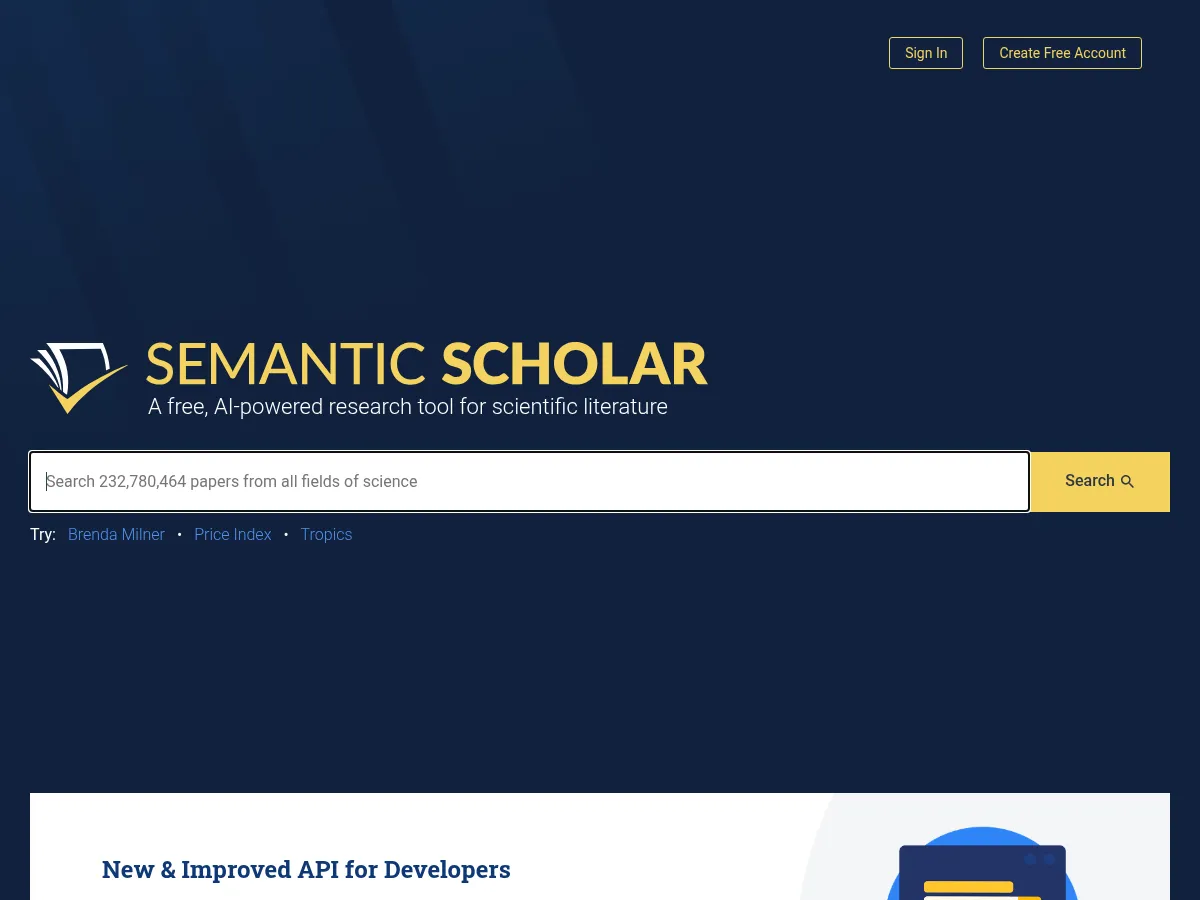
Semantic Scholar 是一个领先的 AI 驱动学术搜索引擎,使用自然语言处理来理解研究查询背后的含义,并从包含超过 2 亿篇论文的语料库中获取相关论文。其语义搜索功能超越关键词匹配,可以在所有科学学科中找到概念上相关的研究。
AI 摘要工具
Semantic Scholar 提供了由 AI 生成的 TLDR 摘要,这些摘要提供学术论文的简洁单句概述,使研究人员能够快速评估论文的相关性,而无需阅读完整摘要。该摘要功能适用于其整个包含超过 2 亿篇论文的语料库,极大地加快了文献扫描过程。
工具详情 免费
Semantic Scholar, developed by the Allen Institute for AI, is one of the most powerful free academic search engines available. With over 200 million papers indexed, it leverages AI to surface relevant research through semantic understanding rather than simple keyword matching. Its TLDR feature provides concise AI-generated summaries of papers, while citation context and influence scores help researchers quickly assess a paper's impact and relevance.
The platform's open API is a standout feature, enabling developers to build custom research tools and integrate scholarly data into workflows. The knowledge graph connecting papers, authors, and topics is exceptionally well-structured, making literature discovery intuitive and efficient.
Strengths include its completely free access, robust API, citation analysis tools, and the Semantic Reader for enhanced paper comprehension. Limitations include occasional gaps in non-English literature coverage, and the AI summarization, while useful, can oversimplify nuanced findings. The interface is clean but could benefit from more advanced filtering options. For academic researchers and anyone navigating scientific literature, Semantic Scholar is an indispensable tool that genuinely democratizes access to knowledge.
 Powered by Rexiew